
Learning music through New York’s clubs
Ronson’s musical education connected records across generations. Born in Britain, he moved to New York at eight. As Performing Songwriter’s career interview explains, the soul records he heard at home turned up again as samples in the hip hop he loved. His stepfather was Foreigner guitarist Mick Jones.
In his documentary How To Be, Ronson returns to the record shop that shaped his early DJ years. He describes DJing as his way into music before he knew how to make beats. Rashida Jones remembers him playing four or five nights a week.
The work was practical and persistent. Ronson took mixtapes to clubs, approached promoters and accepted small gigs. That history helps explain a producer who thinks about the relationship between records, performers and listeners.
The first breaks did not settle the question
Producing Nikka Costa gave Ronson an early opening, but the excitement around Like a Feather outpaced its commercial reception. In his Hollywood Reporter interview, he remembers people predicting an enormous hit. The experience taught him to distrust advance hype and concentrate on whether he liked the music.
His own debut, Here Comes the Fuzz, arrived in 2003. Looking back in a conversation reported by The National, Ronson recalled a career downturn after the initial attention around that record.
By 30, he was wondering whether to find another profession. He told Performing Songwriter that contemporaries were advancing while he questioned his own ability. Working with Lily Allen and then Winehouse helped him stop thinking so much about chart positions.
Back to Black began with listening
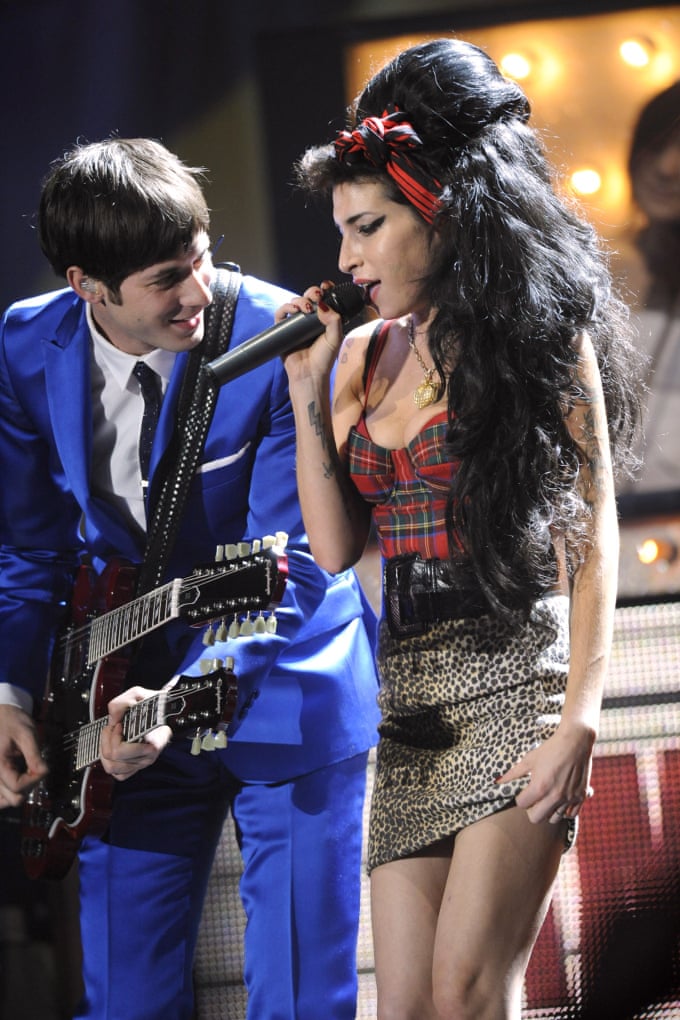
Ronson’s first move with Winehouse was to ask what she wanted her record to sound like. She brought music she loved, including the Shangri Las. Their shared references gave the sessions a direction, as he describes in the interview about their creative partnership.
His documentary makes the exchange tangible. In the account of their first studio meeting, Ronson describes building piano chords and a rhythm inspired by those records. Winehouse heard the result, took it into another room and returned with Back to Black written.
There is a useful distinction here for anyone making work with another person: a strong reference can give you somewhere to begin while leaving room for something neither person could have made alone.
The demo also shows how much could be achieved with imperfect technique. Ronson explains that he struggled to play the drum pattern with a pedal, so he played it by hand. Effects helped give the piano the older texture he was imagining. Winehouse also persuaded him to try a keyboard sound that challenged his idea of which instruments belonged.
- 3:55: compare the piano before and after effects.
- 5:41: hear his workaround for the drum part.
- 10:59: follow Winehouse’s unexpected keyboard suggestion.
Listen for the decisions that communicate the idea. The rough recording already gives the collaborators something concrete to respond to.
From the demo to the band
Live musicians helped turn those ideas into finished records. In Ronson’s GRAMMY.com account of Rehab, the Dap Kings brought a different feel to his demo. He played Winehouse’s recorded vocal to the band so they could follow the arrangement.
The partnership continued on Valerie for his 2007 album Version. Winehouse suggested the Zutons song. After an initial take, Ronson asked the musicians to try it faster. That further attempt became the recording on his album.
Send your own music to collaborators.
When your demo, stems or mix is ready for someone else’s ears, HeftySend lets you send up to 100 GB free per transfer, with three day expiry. Neither you nor the recipient needs an account for a free transfer.
Our guide to sending audio stems to a mixing engineer covers preparing the handover.
Uptown Funk and a wider production role
Ronson kept developing through other musicians. Speaking to The Hollywood Reporter about working with Bruno Mars, he described learning to welcome suggestions that contradicted his first reaction. Mars could hear possibilities he had missed.
Uptown Funk grew from an extended jam with Mars on drums, Ronson on bass and Jeff Bhasker on keyboards, with Philip Lawrence also present. As Ronson explains in the interview tracing his later collaborations, they selected sections and developed lyrics together. His role expanded again when he oversaw music for Barbie in 2023.
Yet success did not erase the influence of earlier sessions. In 2021, he told The National that he still imagined Winehouse challenging an idea that sounded insincere. He continued to value music that felt right before considering whether it would become popular.
Read across these accounts, Ronson’s career suggests a workable creative habit: develop your taste, make the idea audible, then let a collaborator surprise you. His strongest examples involve both a clear musical point of view and a willingness to change it.
Questions about Mark Ronson’s career
How did Mark Ronson start making music professionally?
He worked as a club DJ in New York before establishing himself as a producer. Nikka Costa was an important early production collaboration.
What changed his career?
His work with Lily Allen and Amy Winehouse helped establish his production career. Back to Black became a defining project.
Did Ronson make Back to Black on his own?
No. His accounts describe a collaboration shaped by Winehouse’s writing and musical direction, his production ideas and the performances of live musicians.
What can producers learn from his demo breakdown?
Get the musical idea across with the skills you have, try practical workarounds and give a collaborator’s unfamiliar suggestion a hearing.