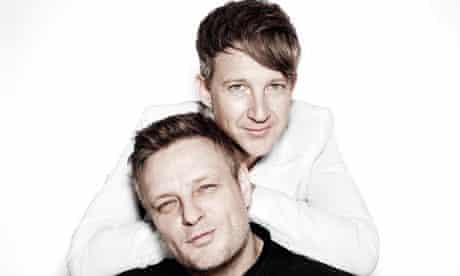
Why Rankin left accountancy for photography
Rankin’s interest in photography began while he was studying accountancy. In his IdeasTap interview about changing direction, he remembers living among art students whose habit of questioning things unsettled his own assumptions. Photography began as a hobby, then became something he wanted to study.
He also learnt which kind of photographer he could become. Documentary work did not feel like his strength. Making someone comfortable in front of a camera did. Portraiture gave that social instinct a purpose: the encounter could help produce the expression.
The student magazine that brought him to Jefferson Hack
The partnership began with an almost empty meeting. In Jefferson Hack’s account of their student publishing years, Rankin recruited volunteers for a magazine at the London College of Printing. Hack was the only person who came.
The next day, they visited Gilbert and George. Rankin would take photographs; Hack, who had never conducted an interview, would ask the questions. Three issues of their student magazine, Untitled, became their practical education.
With designer Ian Taylor, they used a borrowed college computer to make pages over weekends. Hack describes the access to desktop publishing as crucial: it put production within their reach. Dazed followed as a folded poster, although the second issue took a year to appear.
A loan from Rankin’s father helped fund Dazed. The opportunity was something they assembled, with help, before they had an established publishing career.
From a personal platform to major commissions
In 1998, Rankin identified Björk’s press photographs as an early break: the work led to an agent.
His later commissions included the Queen’s 2002 Jubilee portrait and Dove in 2004.
Yet he drew a distinction between earning money and becoming recognised. In the IdeasTap interview, Rankin credits personal projects with establishing his reputation. Commercial assignments paid him; independently chosen work helped people understand what interested him.
That makes the publishing part of his story especially useful. A magazine can be more than a destination for finished pictures. It can give a photographer a reason to make them, a group of collaborators and an audience willing to look.
HeftySend’s Free plan lets you send up to 100 GB per transfer without an account, with three day expiry. For a complete shoot package, follow our guide to sending a folder without missing files.
Keeping a career going after the breakthrough
By his 2021 conversation with Fora, Rankin’s publishing work also included Hunger. His explanation of professional longevity was less glamorous than a list of famous sitters: a commissioned photographer has to deliver consistently.
Preparation, the session and delivery belong together. Assistants help him work quickly, keeping his attention on the sitter.


During the pandemic, working alone with a camera and flowers brought back the pleasure of experimenting. The founder still needed to make pictures for himself.
Start at 20:44 for consistency on commissions, then 25:56 for why his team works quickly. At 54:31 he recalls discovering that students could make a magazine.
Questions about Rankin’s career
Did Rankin start out studying photography?
No. He began with accountancy before discovering photography among art students.
Who helped Rankin start Dazed?
Jefferson Hack was his cofounder. Their partnership began on the student magazine Untitled.
When did Dazed launch?
Accounts differ: the Guardian gives 1991; the Independent’s career chronology gives 1992.
What advice does Rankin give photographers?
Practise regularly, ask for useful criticism and fulfil the commission reliably.
For another route into portraiture, read how Platon built his portrait photography career.